Every organic waste stream is different. Two breweries of a similar size can produce wastewater with very different strength, composition and energy potential. The same is true of dairies, food manufacturers and anaerobic digestion (AD) feedstocks.
Yet many on-site treatment projects are still sized and costed using textbook values and industry averages. At WASE, we start somewhere else: with a sample of your waste in our laboratory.
This article explains what we test, why it matters, and how laboratory data turns an indicative proposal into a business case you can take to your board.
Why averages make a weak foundation
Industrial wastewater rarely behaves like a reference value. Its organic strength can shift with production schedules, cleaning cycles and seasonal product mixes. It may contain compounds that slow microbial activity, or lack the nutrients that methane-producing microbes need to perform well.
If a system is designed around assumptions rather than measurements, the risks are practical and financial:
- Oversizing ties up capital in capacity you do not need.
- Undersizing puts effluent compliance and energy output at risk.
- Inaccurate yield estimates mean the payback period in the proposal is not the payback period you experience.
For a capital investment decision, those risks matter.
What we test, and why
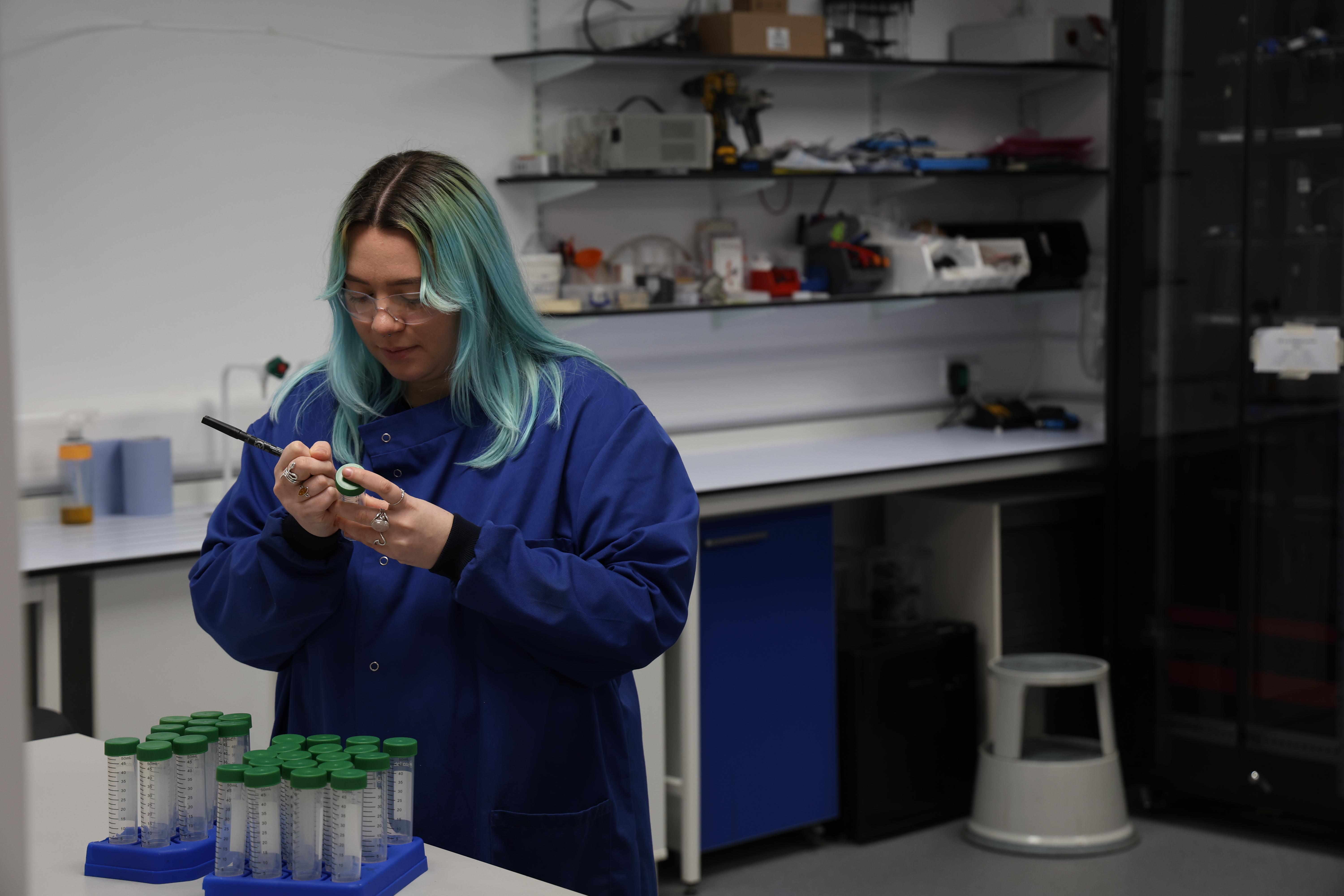
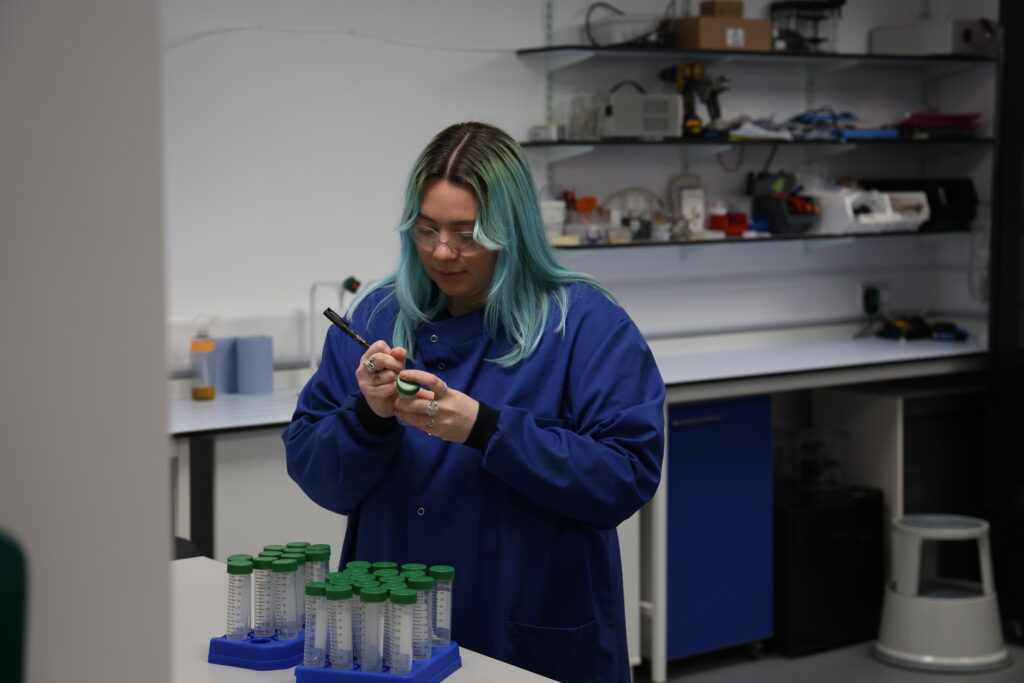
The WASE laboratory is a commercial bioelectrochemical test facility, set up to characterise customer waste streams specifically for treatment in the WASE Electro-Methanogenic Reactor (EMR). Our analysis covers three areas:
- Organic profiling – understanding the organic make-up of your sample, to gauge how well it suits WASE treatment.
- Nutrient analysis – a compositional report of the nutrients present, which affect both chemical treatment requirements and methane production.
- Bioelectrochemical methane potential (BEMP) analysis – quantifying the methane yield your waste can achieve through electromethanogenesis.
BMP and BEMP: measuring the difference
The biochemical methane potential (BMP) assay is the established industry method for estimating how much methane a substrate can produce through conventional anaerobic digestion. It relies entirely on microbial breakdown of organic matter.
The BEMP assay builds on this by adding an anode and a cathode. At the anode, electroactive bacteria break down organic compounds quickly and pass electrons to the electrode. At the cathode, electromethanogens use those electrons to convert carbon dioxide directly into methane. This additional pathway is the basis of the WASE EMR.
Running both assays on the same sample shows the methane uplift that electromethanogenesis delivers on your specific feedstock, rather than relying on a general performance claim.
From laboratory data to a bankable business case
Laboratory results feed directly into the proposal our engineering and commercial teams build for you. They inform:
- System sizing – matching reactor capacity to your actual organic load.
- Energy yield – how much biogas can offset natural gas or electricity use on site.
- Effluent quality – whether treated water can be discharged to sewer or the environment, removing the need for paid collections.
- Financial modelling – avoided haulage and gate fees, energy savings and payback period.
This matters more now than it did a few years ago. Commercial energy prices are uncapped, waste haulage costs have risen sharply for many producers, and industrial businesses increasingly compete with local authorities for AD capacity as household and commercial food waste collections expand.
Most WASE customers see a return on investment of three to five years when moving from hauled waste treatment to an on-site WASE EMR system. The as-tested laboratory data is what helps us calibrate our calculations, helping provide the most accurate business case possible.
For AD and renewable natural gas operators
The same approach applies to existing AD plants and biomethane projects. BEMP testing can quantify the potential yield improvement from integrating WASE technology on your current feedstocks, and assess whether new or challenging feedstocks are suitable.
The team behind the data
WASE have a talented team of expert scientists, operating the laboratory at our headquarters in Bristol, UK. We have the ability to run multiple experiments in parallel, ensuring a speedy turnaround on laboratory testing for our customers.
A straightforward process
- Order and book your lab testing with the WASE team.
- Send us a sample of your wastewater or feedstock.
- Receive expert analysis and a clear view of what WASE could deliver on your site.
Where continuous operational data is needed, laboratory results can be followed by on-site trials using our miniWASE pilot system, before embarking on a full system design proposal.
Real performance, measured
At Hepworth Brewery, a WASE system treats 17 m³ of wastewater per day, generates 362 MWh of net energy per year and saves 100 tonnes of CO₂ annually, turning a costly disposal problem into an on-site energy source.
Every project like this starts with understanding the waste. Hepworth like all of our customers started with a lab test.
If you produce high-strength organic wastewater or manage AD feedstocks, we would welcome the chance to test a sample. Contact the team at wase.co.uk/get-in-touch or visit wase.co.uk/lab-testing.